Corridor Land Management Guidelines
How To Manage Your Land In The Corridor
Eden to Addo has corridor coordinators in the landscape who can be called upon to identify corridors and initiate management.
There are many activities that the individual landowner can undertake to ensure that biodiversity is enhanced and that the patterns and processes that support life within the corridor are encouraged. A lot of these are already being carried out by landowners within the corridors who should be complemented on their commitment to conservation.


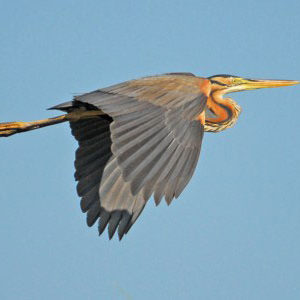


Eden to Addo is the kind of project that has a potential triple bottom line built into it – Environmentally Sustainable, Economically Viable & Socially acceptable.”
Land Management Activities
Invasive Alien Plant Management
Invasive Alien Plant Species are one of the single biggest threats to biodiversity in the region. It is important for the long term health of the corridor to control the spread of weeds in a systematic and consistent manner. Very often the control of weeds is closely linked to a burning regime in order to facilitate follow-up clearing.
ACTION
Identification, prioritization, control and maintenance of stands of alien invasive plant species.
WHO
Identification, prioritization, control and maintenance of stands of alien invasive plant species.
HOW
Priority areas are selected where densities are lower but where virulent species occur. Areas of higher density should be contained. Priority areas are cleared first.
Local, trained contractors are available who can provide professional quotes. Landowners to decide which methods best suit their requirements. Some prefer trees to die standing to maintain windbreaks, some prefer no use of herbicide. Methods include: mechanical (chainsaw), labour intensive and non-chemical (hand pulling), frilling (incision made in bark with application of herbicide) or ring barking.
WHEN
During the non-growing season when plants respond better to clearing methods and herbicides.
The legislation pertaining to the removal of alien invasive plant species is the Conservation of Agricultural Resources Act or CARA.


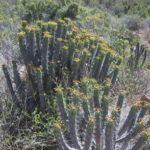


Invasive Alien Plant Management
Invasive Alien Plant Species are one of the single biggest threats to biodiversity in the region. It is important for the long term health of the corridor to control the spread of weeds in a systematic and consistent manner. Very often the control of weeds is closely linked to a burning regime in order to facilitate follow-up clearing.
ACTION
Identification, prioritization, control and maintenance of stands of alien invasive plant species.
WHO
Identification, prioritization, control and maintenance of stands of alien invasive plant species.
HOW
Priority areas are selected where densities are lower but where virulent species occur. Areas of higher density should be contained. Priority areas are cleared first.
Local, trained contractors are available who can provide professional quotes. Landowners to decide which methods best suit their requirements. Some prefer trees to die standing to maintain windbreaks, some prefer no use of herbicide. Methods include: mechanical (chainsaw), labour intensive and non-chemical (hand pulling), frilling (incision made in bark with application of herbicide) or ring barking.
WHEN
During the non-growing season when plants respond better to clearing methods and herbicides.
The legislation pertaining to the removal of alien invasive plant species is the Conservation of Agricultural Resources Act or CARA.
Fire Management
Firebreaks and controlled burns are required to create a fire mosaic or patches of differently aged veld. This allows for the correct frequency and intensity of fires so that fires do not occur too often, leading to the prevalence of pioneer species or weeds. If fires are not frequent enough the result is old, moribund veld
There are three options to burning:
- Prescribed burning as per a fire plan that provides for a mosaic of veld ages and reduction of fuel load.
- Compartmental burning allows the landowner/s to choose large compartments, which may be isolated by pre-emptive burning of smaller compartments and the use of natural and other fire barriers (roads, young veld) thus allowing the peripheral compartments to be ignited under more manageable conditions while core areas can be managed according to natural burning conditions.
- Adaptive Interference management is based on natural ignitions (lightning) and supplemented by intentional burnes
ACTION
Fire break clearing, and where necessary controlled burns.
WHO
All landowners in fire prone areas i.e. surrounded or bordered by fynbos, plantation or alien invasive plants. The decision to burn must be approved by the Fire Protection Association who will issue a permit. The local or district authority must also be notified.
HOW
Firebreaks can be burnt or mechanically created. Any planned burn must be well co-ordinated with landowners and authorities. 1 day of burning requires 3 days of follow-up and control. Requirements for a burn: Diesel bakkie, drip torches, travel costs, rations, safety gear, salaries for staff. Requirements for mechanical clearing of fire break: mower or bossie kapper, tractor, diesel, driver costs. If the burn is smaller in extent then landowners can provide the labour. Similarly for mechanical fire breaks – instead of machinery labour intensive methods can be used e.g. hoes and spades.
WHEN
Fynbos should burn on average every 12 years or between 9 and 15 years depending upon the veld type.
Controlled burns may not take place on a Friday, Saturday or Sunday. No fires are permitted on Orange or Red days and only on Yellow days with permission of the Chief Fire officer.


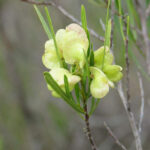
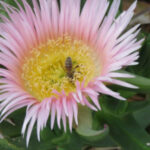
Rehabilitation & Restoration
Once the large or continuous areas of pristine habitat are conserved it becomes necessary to look at the disturbed areas and see whether it is possible to restore them so that the core is buffered against the edge effect of other land use practices. In the E2A Corridor disturbed land often comprises tracts of old agricultural land that, although useful as corridors for movement of mammals, may require active restoration if they are to regain some of their original characteristics. Many techniques exist that encourage the return of original plant and animal species almost all of them beginning with the principle that you conserve what remains and then remove alien invasive plants.
A simple and cost effective way of rehabilitating or re-vegetating disturbed areas with endemic species is to erect bird perches or to leave ring-barked trees standing to provide shade and a perch. The perches act as momentary respite for birds passing from an intact or pristine area, their bellies full of seed, to the next feeding site allowing them to make deposits along the way. In addition, commercially grown plants should be avoided as these harbour alien seeds in the soil and might not always be the appropriate, endemic species you require. Other simple methods of rehabilitation or restoration involve limiting the effects of soil erosion and the maintenance of gravel roads and their verges.
ACTION
The active rehabilitation or revegetation of transformed or degraded land. Anyone who has intact vegetation that is bordered by agricultural or transformed land.
WHO
Identify priority areas based on potential for further degradation and available resources. Spread flower heads and mulch from surrounding areas (min one flower head with seeds per spare meter) CapeNature.
HOW
Erect birch perches, collect seedlings from nearby and either bag them for replanting later or plant directly. Use existing material for bird perches, preferably dead wattle, gum or blackwood. Re-vegetate areas that are prone to erosion or in extreme cases consider using swales or gabions. Keep records (photographic and descriptive).
WHEN
Re-vegetation or the sowing of endemic seeds should take place in the Autumn after a fire (CapeNature).




Fencing for Agricultural, Residential & Game Purposes
The fencing of agricultural land, residences and game is common practice in the E2A corridor. Although fences may seem like an obvious obstacle to movement within a corridor, the ability of wild game to move through, around and underneath these obstacles can not be underestimated. However, in an effort to make movement of the naturally occurring species easier the following guidelines are important:
ACTION
Fencing of residences, game, domestic stock and pets.
WHO
Anyone who has a need to keep their domestic stock or pets IN, and other animals (wild or domestic) OUT of a certain area.
HOW
Where fences are essential it is best to enclose only the area that has to be contained without fencing the entire cadastral unit. “Conservation fencing” or fencing that is permeable to wild species is designed to retain domestic stock like cows while allowing local game to pass through. With a gap of 300mm between the ground and the first strand, species such as tortoise, bushbuck, blue duiker and bushpig are able to move freely. If a game fence already exists, gates can be inserted into the fence at intervals without losing the tension of the fence. The gates should be min. 400mm X 400mm (Pers comm. Ken Coetzee). Mesh fence is not a very good fencing option as it is practically impermeable and should be avoided entirely. One of the most effective, albeit costly, ways of enclosing domestic animals is an electric fence of 2 or 3 strands.
WHEN
Any time.